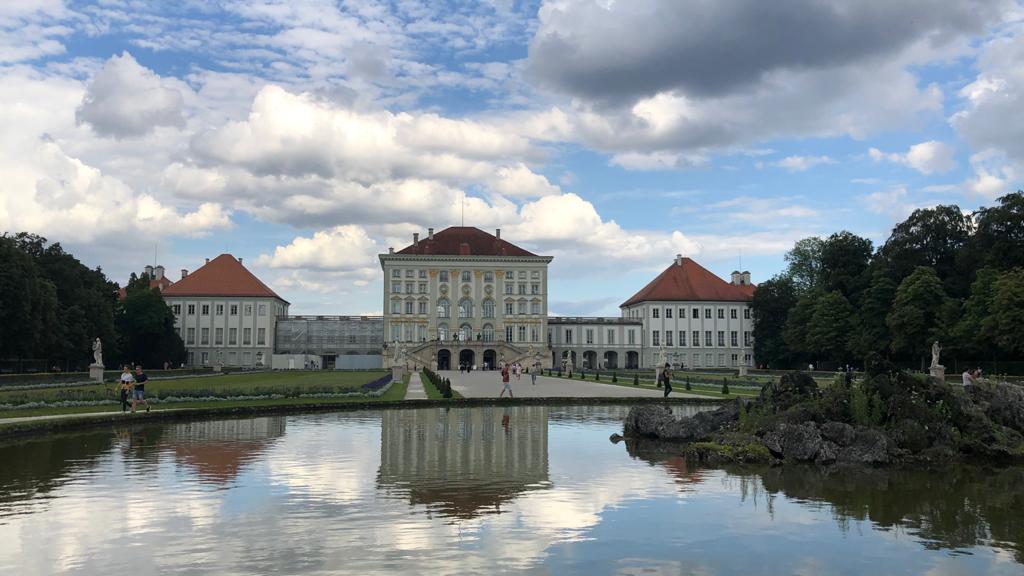
Nymphenburg Palace & Park: Tickets, Tips and What to See
Disclaimer: This article is not sponsored. We simply enjoy visiting Nymphenburg Palace and its park and wanted to share our experiences and tips with you.
All photographs in this article were taken by us, Irina and Bernhard, unless otherwise stated.
Hallo, this is Bernhard! I’m happy to share a few tips with you about visiting Nymphenburg Palace and its beautiful park here in Munich. Irina and I have been coming here for years, and it’s one of our favourite places to spend time outdoors.
One of the things I appreciate most about Nymphenburg Palace Park is how much space there is. Even when other people are visiting, you can often find a quiet path, enjoy the atmosphere and walk for quite a while without constantly bumping into other visitors.
Having grown up in the area around Tübingen, surrounded by forests and nature, I missed that feeling after moving to Munich. Nymphenburg gives me a chance to escape the city for a while and enjoy the kind of surroundings I grew up with.
Even though finding a parking spot can sometimes be annoying — and that’s a general problem in Munich — the drive to Nymphenburg is always worth it for me.
In this guide, I’ll share what you can visit, which tickets are available, and how we’d spend a few hours here.
And if you’d like to know why this place means so much to us personally, read our companion article: Nymphenburg Palace Park: 6 Reasons We Keep Coming Back.
➜Looking for something specific? Jump straight to:
Nymphs, Royalty & a Touch of Magic
Probably most of you have heard of Nymphenburg Palace and its massive park by now, but I’m not sure you all know about the meaning behind its name.
The name Nymphenburg comes from the Italian expression borgo delle ninfe, meaning “village of the nymphs.” Nymphs were divine nature spirits associated with springs, forests and groves.
What I find interesting is how the palace and park bring together two very different things: the grandeur of Bavarian royal life and the peaceful atmosphere of nature.
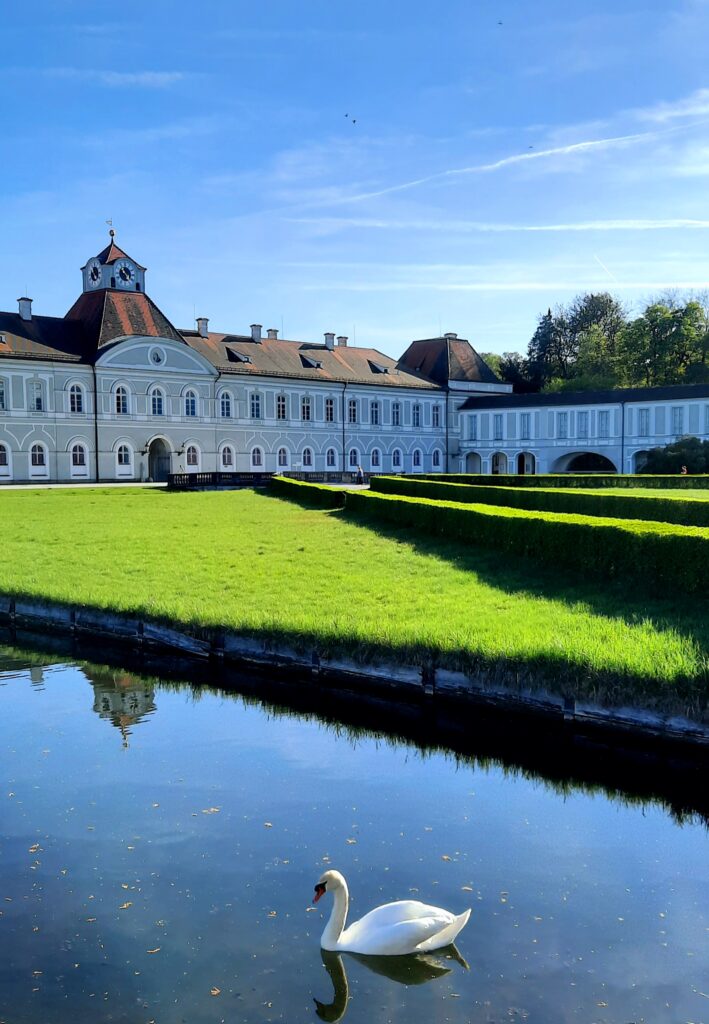
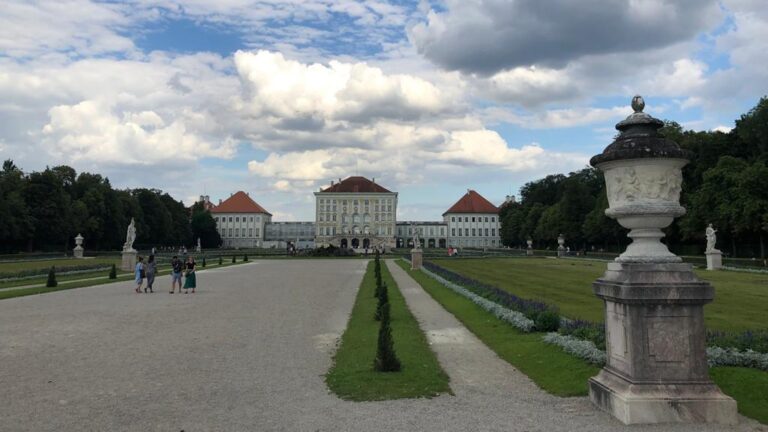
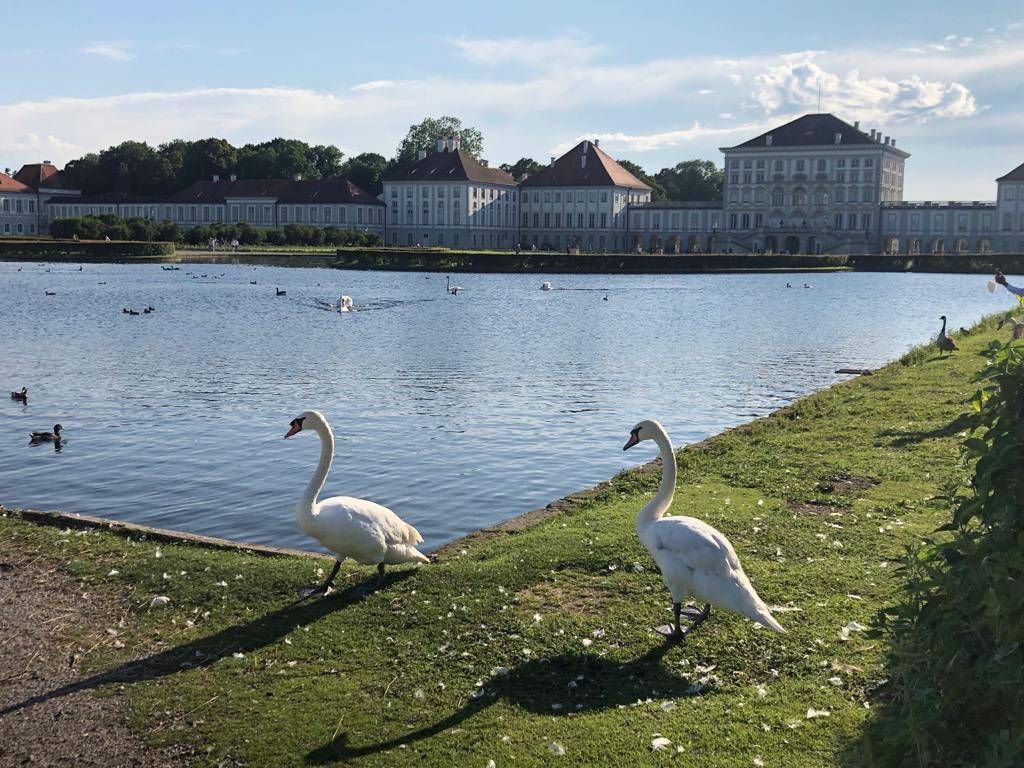
And I think that’s still part of Nymphenburg’s appeal today. You can admire the palace, but you can also simply enjoy being outside. Over the centuries, the palace and gardens developed into a magnificent royal residence, with formal gardens, wooded paths, canals and smaller palaces hidden throughout the park.
And trust me, when you see it with your own eyes, you will agree that there is something magical about it.
What Can You Visit at Nymphenburg?
Nymphenburg Palace
The main palace building features several impressive rooms, including:
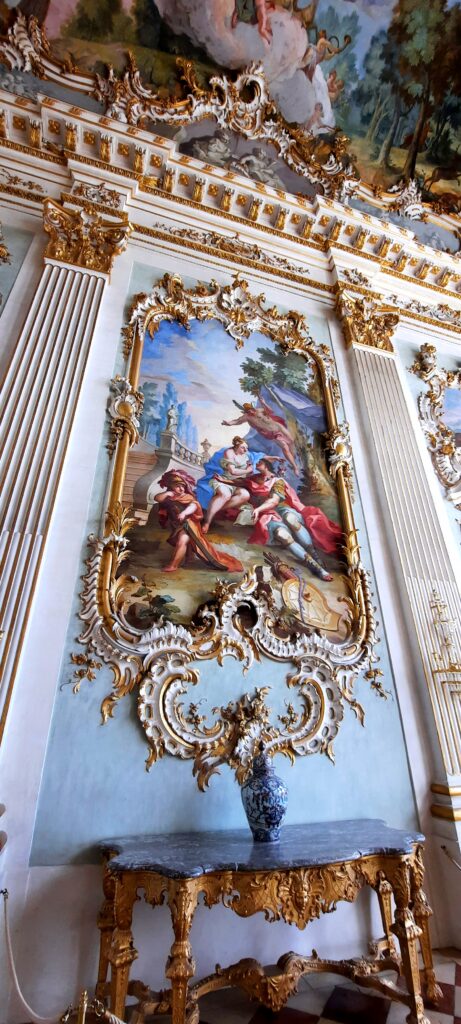
- The Stone Hall (Steinerner Saal), with its magnificent Rococo decoration.
- The room where King Ludwig II was born.
- King Ludwig I’s Gallery of Beauties, featuring portraits of women commissioned by the king.
If you enjoy historic interiors and Bavarian royal history, this is a good place to start.
Marstallmuseum & Porcelain Museum
Located in the former royal stables, the Marstallmuseum features a remarkable collection of historic carriages and sleighs, including some belonging to King Ludwig II.
The upper floor houses the Nymphenburg Porcelain Museum.
I find the historic carriages particularly worth seeing, especially if you’re visiting during the colder months.
The Four Park Palaces
Four smaller buildings are hidden throughout the park, each with its own character.
Badenburg: A Celebration of Water and Privacy
Located in the southern part of the park, Badenburg was built in the early 18th century.
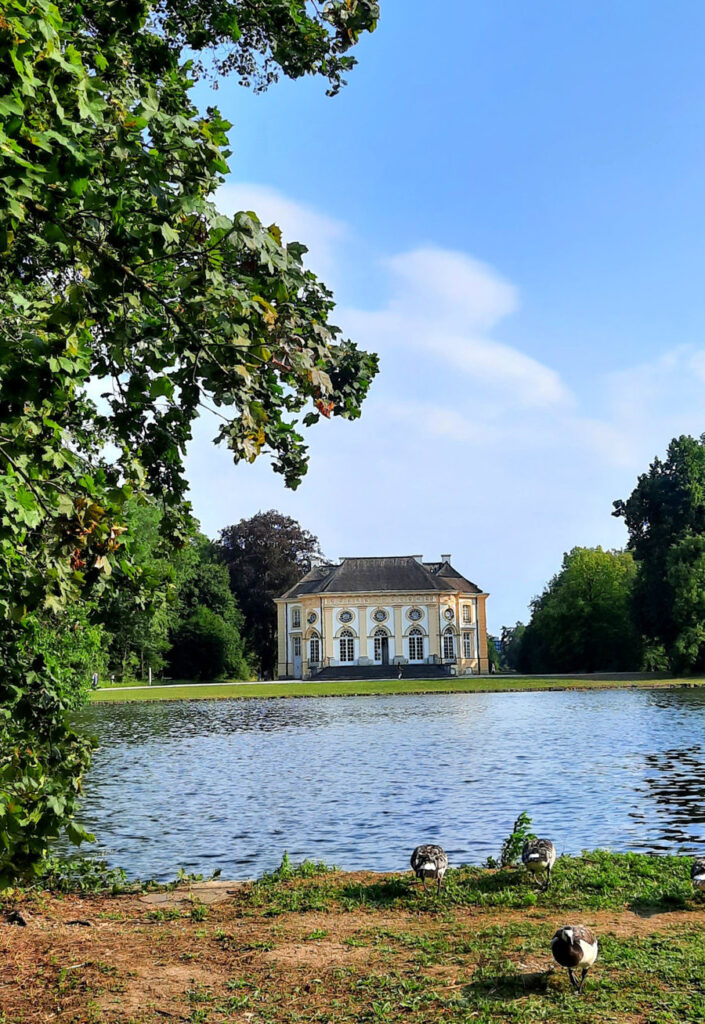
It contains an impressive indoor bathing pool, along with a heating room and beautifully decorated interiors.
It’s quite fascinating to imagine an indoor bathing pool like this in an 18th-century palace.
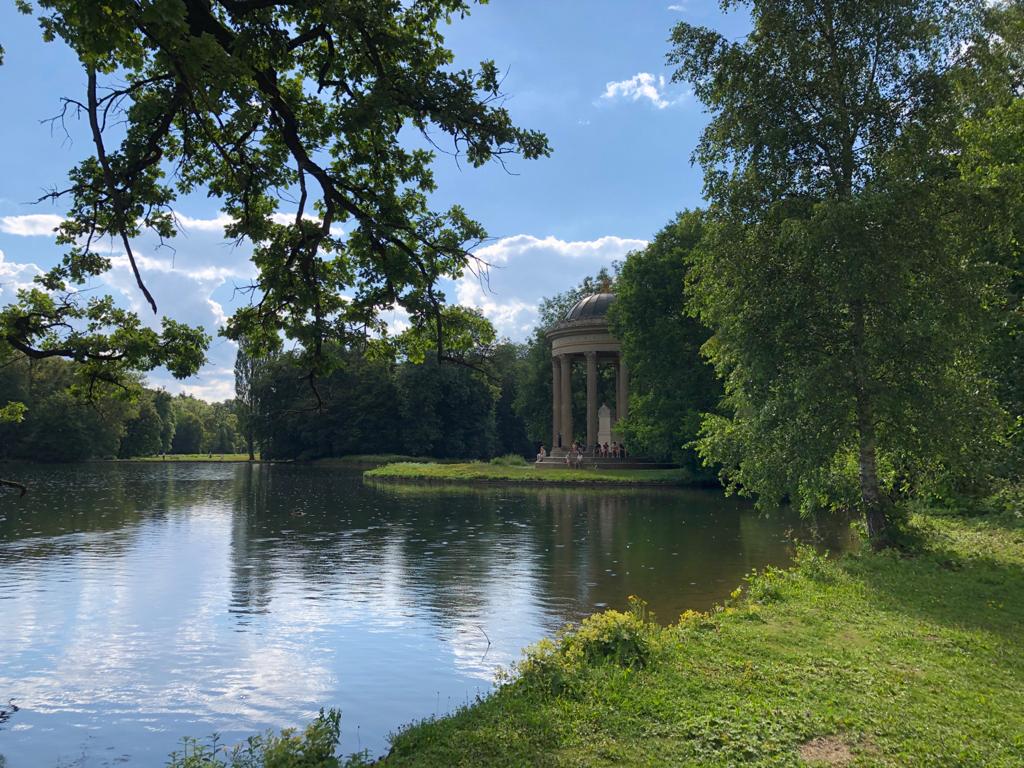
Another beautiful place in the park is the Monopteros, also known as the Temple of Apollo. It is one of our favorite photo spots, for obvious reasons. It is simply amazing sitting there by the water! People often sit on its steps and enjoy the view.
Amalienburg: A Hunting Lodge Fit for Royalty
Officially, the building was a small hunting lodge used for courtly hunting activities.
In reality, it was also a display of the Bavarian court’s immense wealth and sophisticated artistic taste.
Its famous Hall of Mirrors is a wonderful example of Rococo design.
Pagodenburg
A small, elegant pavilion with interiors inspired partly by Asian decorative styles popular at European courts during the 18th century.
Magdalenenklause
An unusual building designed to look like a ruined hermitage, offering a striking contrast to the grandeur of the palace.
Important: The four park palaces are open seasonally, from April to 15 October.
For more details, see the official Nymphenburg Palace website.
Nymphenburg Palace Park
The vast park covers approximately 180 hectares (445 acres) and is free to enter.
It combines formal Baroque garden features with an extensive English-style landscape park, including wooded areas, lakes, canals and winding paths.
You can explore the grounds without buying a palace ticket.
If you enjoy photography or simply spending time outdoors, allow yourself plenty of time. The park is much larger than it first appears.
Only 2–3 Hours? Here’s What I’d Do
If you’re visiting Nymphenburg for the first time and have only two or three hours, my recommendation depends on the weather.
On a cold day, I’d suggest booking tickets in advance and visiting the palace interiors and the Marstallmuseum, where you can admire the historic royal carriages and sleighs. Afterwards, take a stroll through the gardens.
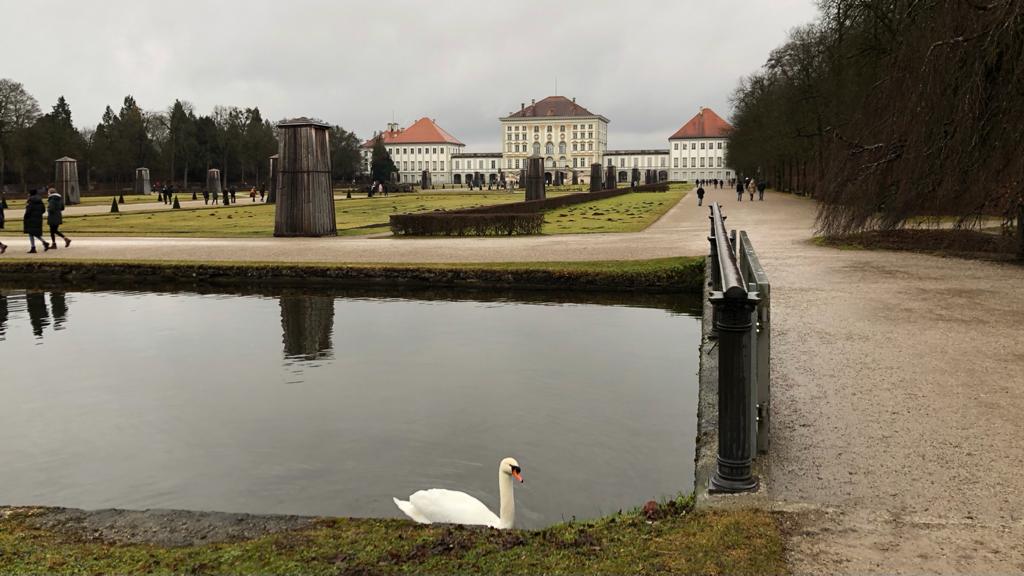
During the warmer months, I’d recommend skipping the interiors if your time is limited and focusing on the park instead. The grounds are massive, the statues are uncovered, and there is so much to explore.
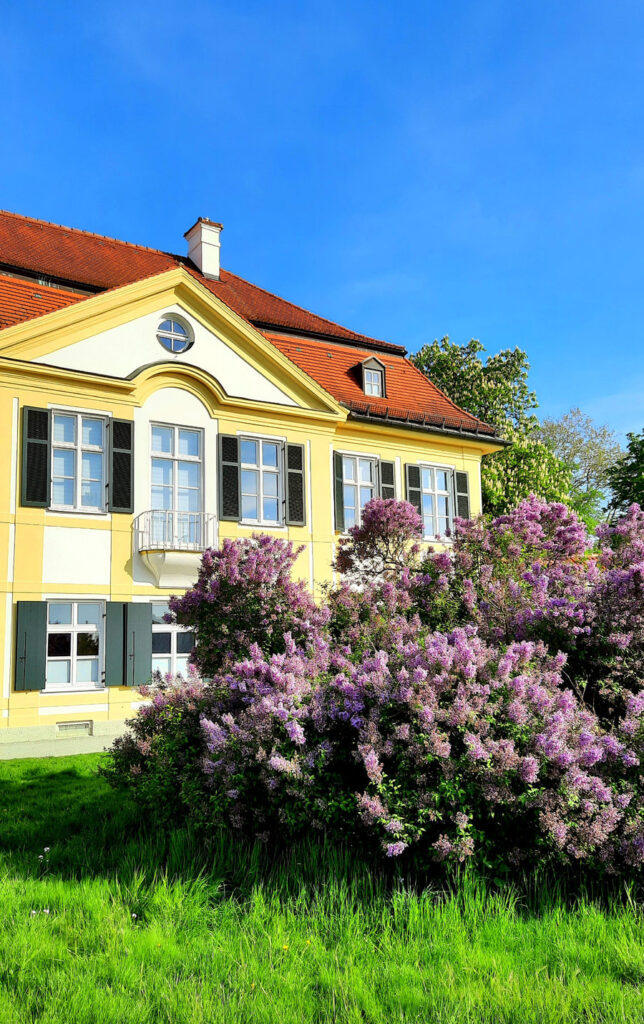
If you visit in May, you might also catch the lilacs in full bloom. Their wonderful scent is one of our favourite things about Nymphenburg in spring.
Of course, if you’re particularly interested in Bavarian history or royal interiors, the palace is well worth seeing whatever the season.
Our Favourite Walking Routes
Here are two routes Irina and I often take.
Walk 1: Canal, Pan Fountain and Grand Cascade
Start at the main palace building and follow the central canal into the park.
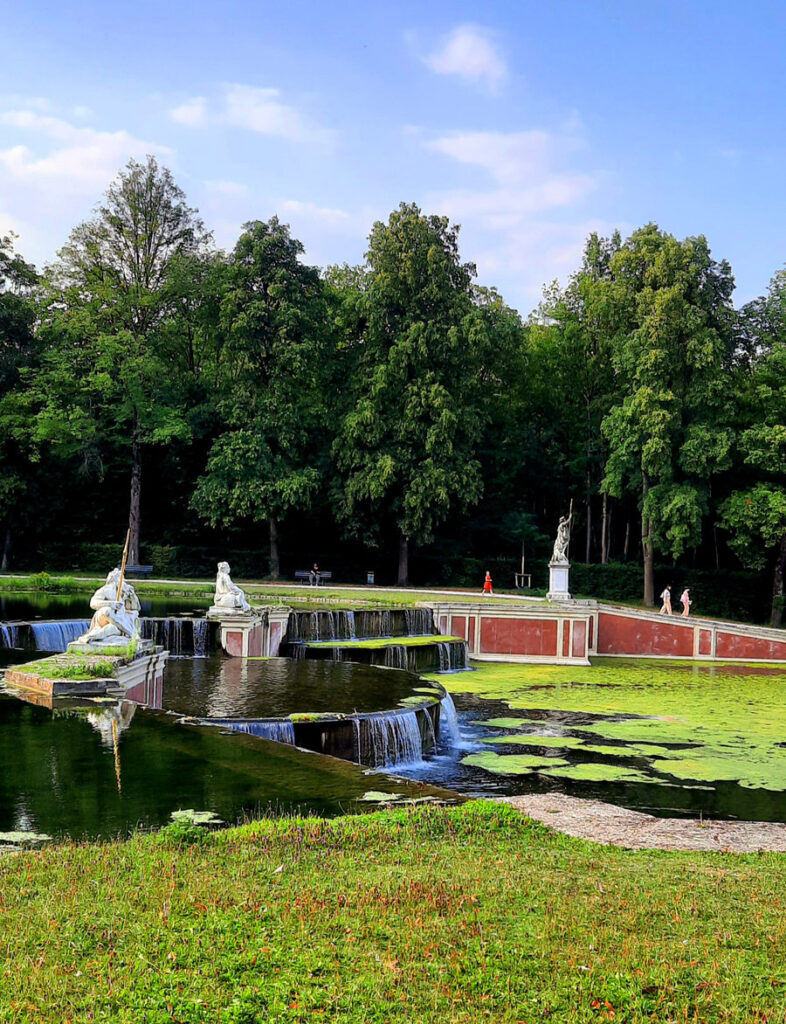
Continue towards the Pan fountain and the Grand Cascade, enjoying the sculptures, waterways and scenery along the way.
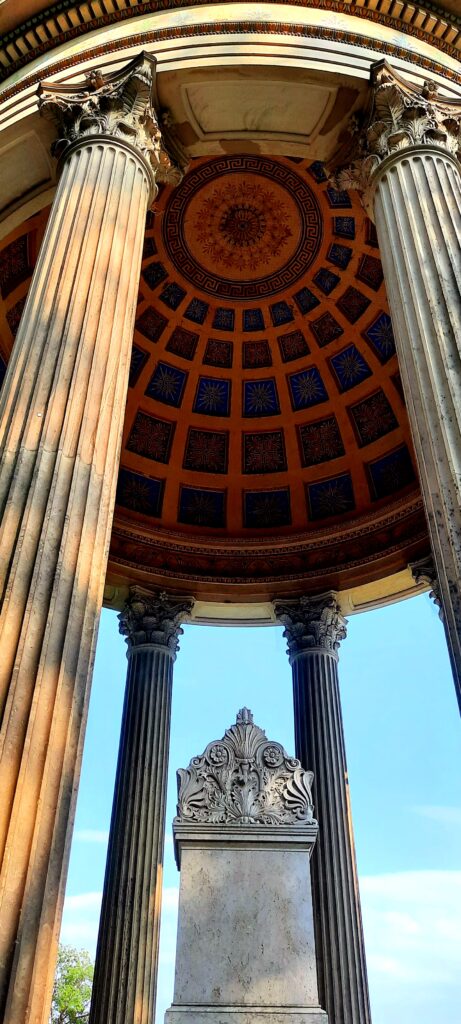
You can also make a detour towards the classical Monopteros, sometimes referred to as the Temple of Apollo.
Then make your way back towards the palace.
Walk 2: Discover the Park Palaces
Start at the main palace building and head towards Amalienburg.
Continue through the southern park towards Badenburg, then explore the grounds in the direction of Pagodenburg before returning to the palace.
These are suggestions rather than fixed itineraries. We often stop to take photographs or simply enjoy the surroundings.
What I particularly enjoy about these walks is that the park never feels empty of life, even when you hardly meet anyone along the paths. There are birds, squirrels and, if you’re lucky, deer.
I especially love spotting the deer and taking photographs of them. Whenever I see one, I usually point it out to Irina as well. I think she’s become quite used to me stopping in the middle of a walk because I’ve spotted another deer. 😄
For navigation, the official Nymphenburg park map (PDF) shows the palace, park buildings, canals, fountains and walking paths.
Nymphenburg Tickets and Prices — 2026
The park itself is free to enter. You only need tickets for the palace interiors, museums and four smaller park palaces.
Official 2026 admission prices:
| Ticket type | Regular | Reduced |
| Nymphenburg Palace | €10 | €9 |
| Marstallmuseum + Porcelain Museum | €8 | €7 |
| Four park palaces | €6 | €5 |
| Summer combination ticket | €20 | €18 |
| Winter combination ticket | €16 | €14 |
Which Ticket Should You Choose?
Palace ticket: Best if you mainly want to explore the royal interiors.
Museum ticket: A good choice if you’re particularly interested in the historic carriages, sleighs and porcelain.
Park palaces ticket: For visitors who want to explore Amalienburg, Badenburg, Pagodenburg and Magdalenenklause during the warmer months.
Summer combination ticket: Covers the palace, both museums and all four park palaces. Available from 1 April to 15 October.
Winter combination ticket: Covers the palace and museums, as the park palaces are closed during winter.
Children under 18 generally receive free admission. Other discounts and free-entry rules are explained on the official website.
Where to Buy Tickets
When booking online, select an available entry time for the palace.
The Marstallmuseum and park palaces don’t require individual time slots.
Online tickets can be purchased up to one day before your visit. Tickets are also available at the ticket desks, subject to availability.
My tip: If you’re planning to visit the palace interiors, booking online in advance can save time.
Opening Hours
Palace and Museums
1 April–15 October: 9:00 am–6:00 pm daily.
16 October–March: 10:00 am–4:00 pm daily.
Last admission is 30 minutes before closing.
Park Palaces
1 April–15 October: 9:00 am–6:00 pm daily.
16 October–March: Closed.
Palace Park
The main park gate opens at 6:00 am daily.
| Months | Main gate closes |
| January–March | 6:00 pm |
| April | 8:00 pm |
| May–September | 9:30 pm |
| October | 8:00 pm |
| November–December | 6:00 pm |
Other park gates close 30 minutes earlier.
Good to know: The Lacquer Cabinet (Room 13) in Nymphenburg Palace is currently closed for restoration, with reopening expected around the end of 2027. The other state rooms remain accessible.
The palace and museums are also closed on 1 January, Faschingsdienstag (Shrove Tuesday), and 24, 25 and 31 December. It’s always worth checking the official website before your visit, as opening times and restoration work can change.
Would You Like a Concert at the Palace?
Nymphenburg isn’t only a place to visit during the day.
Over the years, Irina and I have attended plenty of concerts here, and I really enjoy the combination of music, historic surroundings and a special evening out together.
Where Concerts Take Place
Hubertussaal
A large historic hall in the palace’s northern Orangerie wing, used for concerts and other cultural events.
Johannissaal
A smaller, more intimate hall that is also used for concerts and recitals.
Important for 2026: The Hubertussaal and Orangeriesaal are undergoing renovation and are officially listed as unavailable for events until the end of the year. Check the actual venue before purchasing tickets.
Concert Programmes and Booking Links
- Nymphenburg-Klassik — classical concert programmes.
- Bavaria Klassik — concert information and booking.
- Official Nymphenburg event calendar — events taking place in the palace complex.
- München Ticket — additional concert and event listings.
Concert ticket prices depend on the organizer, performance and seating category. Some events also offer reduced tickets.
I recommend checking the current programme and prices directly with the organizer before booking.
A Few More Things That You Should Know
Gondola rides: During the warmer months, visitors can take a gondola ride along the central canal, weather permitting. You can find details at Gondel Nymphenburg.
Winter visits: Some historic statues are covered during the colder months to protect them from frost and moisture.
Fountains: Fountain operation is seasonal and can be affected by maintenance. Some fountains are out of service in 2026, so check the official visitor notices if this is important to your plans.
Coffee and cake: If you would like to make a stop before or after your visit, one of our favourites is Backspielhaus on Südliche Auffahrtsallee.
Why I Think Nymphenburg Is Worth Visiting
For me, Nymphenburg is a place where there’s always something to discover, whether it’s a historic building, a quiet path or a deer hiding somewhere among the trees.
Nymphenburg feels even more alive than Schleißheim Palace Park, which is another of our favourites. We’ll tell you more about that park in a separate article.
I especially enjoy the freedom to walk around without feeling surrounded by crowds. And although we visit throughout the year, May remains one of our favourite times because of the blooming lilacs.
If you’d like to read more about our personal experiences here, including our deer encounters, concerts and Sunday bakery tradition, have a look at our other article: Nymphenburg Palace Park: 6 Reasons We Keep Coming Back.
Until next time,
Bernhard